

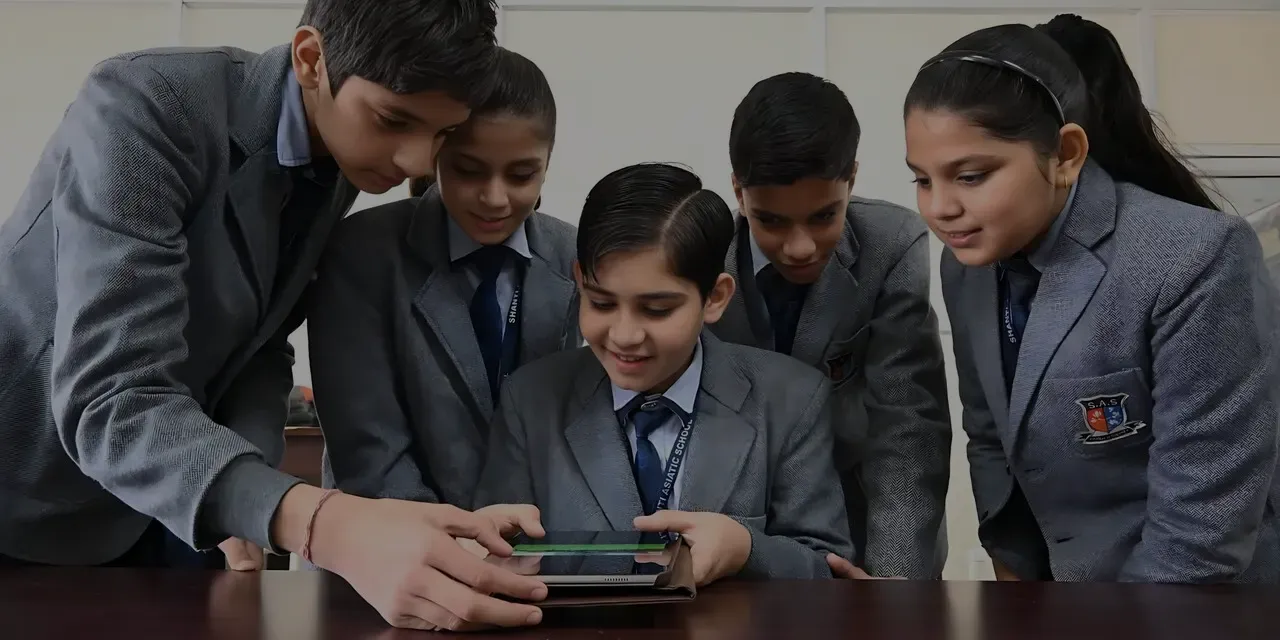
How to Improve Problem-Solving Skills in Students | Best CBSE School in Jaipur 2025–2026
Problem-solving is one of the most essential life skills every student must develop. Whether it’s tackling tricky assignments, managing group projects, or making independent decisions, these skills build confidence, creativity, and logical thinking — qualities that define future-ready learners.
At SAS Jaipur, recognised as one of the Best CBSE Schools in Jaipur (2025–2026), we focus on nurturing analytical and critical thinking from the early years through engaging classroom practices and co-curricular activities.
🌱 Why Problem-Solving Skills Matter
Developing strong problem-solving abilities helps students:
- Strengthen decision-making and analytical thinking
- Build confidence by finding answers independently
- Develop emotional resilience through learning from mistakes
- Improve teamwork and communication
- Prepare for real-life challenges both in and out of school
According to UNICEF Learning Reports, students who learn to approach challenges logically and creatively perform better academically and socially.
🧩 Practical Strategies to Build Problem-Solving Skills
1. Encourage Curiosity and Inquiry
Instead of providing ready answers, motivate students to explore possibilities. Ask them questions like:
“What do you think could be the reason?” or “How can we test your idea?”
This inquiry-based approach builds curiosity and deeper understanding.
2. Let Students Learn Through Trial and Error
At SAS Jaipur, we believe mistakes are powerful teachers. When students attempt different approaches, they develop patience, resilience, and independent thinking — key elements of effective learning.
3. Introduce Interactive Games and Challenges
Engaging classroom and extracurricular activities such as chess, science experiments, and creative puzzles sharpen reasoning skills while keeping learning enjoyable.
4. Apply Real-Life Scenarios
Teachers and parents can present practical examples:
- What would you do if you forgot your notebook at home?
- How can your team divide responsibilities for a group project fairly?
These small challenges encourage situational thinking and adaptability.
5. Promote Collaboration
Team activities like debates, robotics clubs, and science fairs help students learn cooperation, compromise, and leadership — all essential for real-world problem-solving.
6. Teach Step-by-Step Thinking
Break complex problems into smaller, manageable steps.
- Understand the problem
- Identify key information
- Choose a strategy
- Evaluate the outcome
This structure trains students to approach academic and life challenges methodically.
👨🏫 Role of Teachers and Parents
Both teachers and parents play a critical role in shaping a student’s thinking process:
- Be patient and avoid spoon-feeding answers
- Appreciate the effort, not just the results
- Encourage curiosity and independent decision-making
- Model calm, logical problem-solving in daily life
When children see adults approaching challenges constructively, they naturally follow the same mindset.
🧠 Activities That Boost Problem-Solving
- Fun puzzles and riddles
- DIY science experiments
- Family strategy games
- Debates and public speaking
- Outdoor teamwork activities like treasure hunts
These activities make learning more experiential and exciting.
🌟 Conclusion
Problem-solving is not taught in a day — it grows with consistent practice, patience, and the right guidance. At SAS Jaipur, we ensure every learner develops critical thinking skills that prepare them for academic success and real-world confidence.
If you’re looking for the Best CBSE School in Jaipur for 2025–2026, where innovation meets values, SAS Jaipur provides the perfect environment for holistic development.

Related Articles
Pre-Nursery Admission Age vs Nursery Admission: What Parents Should Know in 2026
Pre-Nursery Admission Age vs Nursery Admission: What Parents Should Know in 2026 Prenursery admission age...
Read More →
Future Skills for Students: 21st Century Skills Education for 2026 and Beyond
Future skills for students are becoming one of the most important aspects of modern education....
Read More →
Safe, Smart & Student-Centric Campus: What Makes a School Ideal for Your Child
Choosing the right school for a child is one of the most important decisions for...
Read More →
